
 LANGUAGE
 English
 中文简体
 Español
 日本語
An eyeshadow palette can be much more than a group of colors placed in a compact. Its shades, texture, layout, packaging, and overall appearance can all influence how a product is presented to the market.

This is why custom eyeshadow palettes have become an interesting option for makeup businesses. A buyer may have a particular color concept in mind. Another may want a different palette layout or packaging style. Some may need a product that fits a specific product line rather than a ready-made palette.
Can a Makeup Factory handle these requirements?
In many cases, yes. A makeup factory can support custom eyeshadow palette development in different ways. The level of customization depends on the factory's production capabilities, the product requirements, and how clearly the project is defined.
Customization does not always mean creating every part of a palette from scratch. It can also mean modifying an existing product structure, adjusting colors, changing the palette arrangement, or developing new packaging around an existing product concept.
Understanding how this process works can help buyers communicate their ideas more clearly and choose a suitable manufacturing partner.
What Can a Makeup Factory Customize in an Eyeshadow Palette?
Customization can cover several parts of an eyeshadow palette.
The visible element is usually color. A buyer may want a palette built around a particular color family, mood, or makeup style. The factory can then work with the buyer to develop a suitable combination.
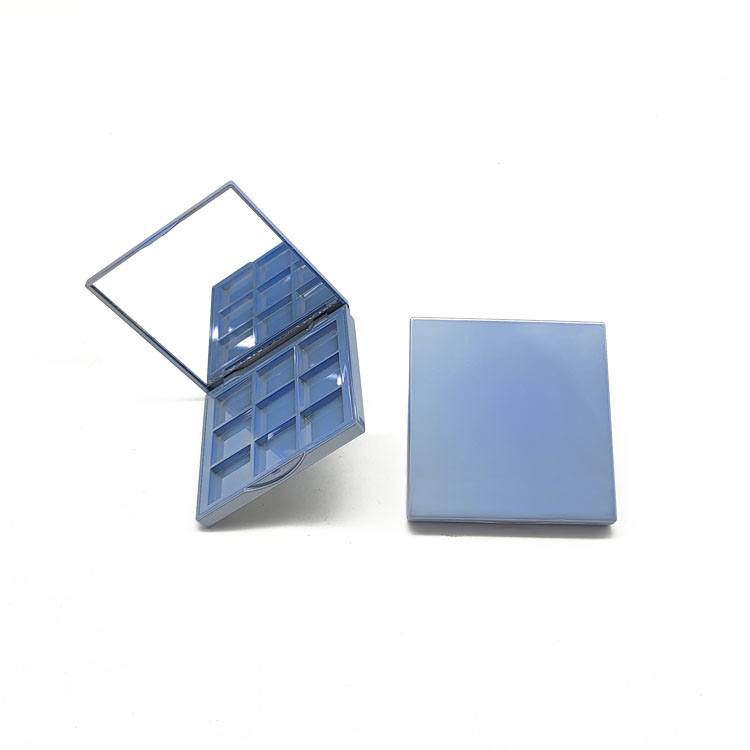
The physical layout can also be customized. An eyeshadow palette may contain several individual pans arranged in a particular pattern. Their shapes and placement can influence the appearance of the finished product.
Packaging offers another area for customization.
The outer case, printed design, internal arrangement, and product presentation can all be discussed during development. A buyer may want a simple appearance or a more distinctive visual identity.
The following table shows some common customization areas.
| Customization Area | What It May Involve |
| Color selection | Choosing a specific group of shades |
| Palette arrangement | Changing the placement or combination of shades |
| Texture | Developing different makeup textures for the palette |
| Case design | Adjusting the appearance of the outer container |
| Surface decoration | Adding visual elements to the packaging |
| Labeling | Preparing product information and identification |
| Packaging | Developing packaging around the finished palette |
| Product presentation | Creating a consistent appearance across the product |
Not every factory will offer the same options.
A buyer should therefore discuss the project before assuming that every requested change can be handled in the same way.
How Does a Makeup Factory Turn an Idea Into a Custom Palette?
A custom eyeshadow palette usually starts with an idea rather than a finished product.
The buyer may have a color concept, a sketch, a reference product, or simply a description of the desired appearance.
The factory needs to turn that idea into something that can be produced.
This process often begins with communication.
The buyer explains what the palette should look like and how it is intended to be positioned. The factory can then identify which parts of the concept involve existing production capabilities and which parts may require additional development.
A typical development process can involve several stages:
1. Product concept
The buyer defines the basic direction of the palette. This may include colors, appearance, product format, and intended audience.
2. Design discussion
The factory and buyer discuss what can be adjusted. Packaging, layout, colors, and other product elements can be considered together.
3. Sample development
A sample gives both sides something physical to review. It can reveal whether the palette matches the original concept.
4. Adjustments
Changes can be made based on the sample. This stage may involve colors, packaging, arrangement, or other details.
5. Production preparation
Once the product direction has been confirmed, the factory can prepare the production process.
The exact process can vary between manufacturers. Some projects may require more development work than others.
A simple palette based on an existing product may move through development more easily than a completely new design.
Why Is Color Selection So Important in Custom Eyeshadow Palettes?
Color is one of the defining features of an eyeshadow palette.
A palette can communicate a particular makeup mood before the product is even opened. Warm shades can create one impression. Cooler colors can create another. Neutral combinations may appeal to a different group of consumers.
For this reason, color selection should be treated as part of the product concept rather than simply a decorative decision.
A Makeup Factory can help organize the production side of the color discussion. However, the buyer should also have a clear idea of what the palette is intended to communicate.
Several questions can help shape the discussion:
- What type of makeup look is the palette intended to support?
- Should the shades work together as a group?
- Should the palette include contrasting colors?
- Is the overall appearance intended to be soft, bold, natural, or varied?
- How should the colors appear together when the palette is opened?
The goal is not simply to collect attractive shades.
The colors should have a relationship with one another.
A well-planned palette can make it easier for users to understand how the shades might be used together. This can also give the product a clearer identity on a crowded cosmetics shelf.
Can Packaging Be Customized Along With the Eyeshadow?
Yes, packaging is often an important part of custom palette development.
The packaging is usually the first physical element a customer sees. Before touching the product or trying the eyeshadow, the customer encounters the case, colors, graphics, and overall presentation.
A custom eyeshadow palette can therefore use packaging to reinforce its visual identity.
A Makeup Factory may be able to support changes to the outer case, surface appearance, printed information, internal layout, and product presentation.
The relationship between the palette and its packaging matters.
Imagine an eyeshadow palette with a carefully selected color collection but packaging that feels unrelated to the product. The overall presentation may appear disconnected.
A coordinated design can create a more unified product experience.
Packaging customization can also involve practical considerations. The case needs to hold the palette securely. The product needs to be presented in an organized way. Labels and other information need to be placed clearly.
This means packaging design is not only about appearance.
It also needs to work with the physical product.
How Does a Factory Handle Different Customization Levels?
Not every custom project requires the same amount of development.
Some buyers may want a ready-made eyeshadow palette with changes to the outer packaging. Others may want to modify colors while keeping the existing case. Another buyer may want to develop the palette, packaging, and presentation as one project.
These different approaches can be grouped into several general levels.
| Customization Level | General Approach |
| Basic adjustment | Modify selected colors or packaging elements |
| Product customization | Develop a palette around a specific color and layout concept |
| Packaging customization | Keep the product structure while changing the outer presentation |
| Full concept development | Coordinate product, layout, packaging, and visual identity |
This distinction is useful when communicating with a factory.
A buyer who says "I need a custom eyeshadow palette" may have a very different expectation from another buyer using the same words.
Clear communication at the beginning can help both sides understand the actual project.
It can also make it easier for the factory to explain what can be produced using an existing process and what may require additional development.
What Should Buyers Ask a Makeup Factory About Custom Eyeshadow Palettes?
A good conversation with a factory can answer many questions before production begins.
Buyers do not need to use complicated manufacturing language. Simple questions are often enough.
Can you develop the palette based on an existing concept?
This helps establish whether the factory can work from the buyer's idea.
Which parts of the palette can be customized?
This can clarify whether customization covers color, layout, packaging, or other elements.
Can you provide a sample before production?
A sample can help confirm whether both sides understand the product in the same way.
How are design changes handled?
This is useful when the buyer expects several rounds of adjustments.
Can packaging and the palette be developed together?
This helps determine whether the factory can manage the product as a complete package.
How is product information handled?
Clear labeling and product information are important parts of a finished cosmetics product.
These questions can make the development process easier to understand before an order moves forward.
They can also reveal how the factory communicates with customers.
Is a Custom Eyeshadow Palette Suitable for Every Makeup Business?
Customization can provide flexibility, but it is not automatically necessary for every product.
A ready-made palette may be suitable when a buyer needs a simple product with limited changes. Custom development becomes more relevant when the buyer wants a specific color concept, packaging appearance, product arrangement, or market positioning.
The decision depends on the purpose of the product.
For example, a business developing a themed makeup collection may benefit from a palette designed around a particular visual concept.
A business that already has an established product design may need a factory capable of reproducing that concept consistently.
Another buyer may simply want different packaging around an existing palette.
These are different requirements, even though they all involve eyeshadow palettes.
A practical way to compare the options is to look at the product goal.
| Product Situation | Possible Approach |
| Simple product requirement | Consider an existing palette |
| Specific color concept | Explore color customization |
| Distinct product appearance | Discuss palette and case design |
| Established product identity | Develop coordinated packaging |
| New product concept | Consider broader customization |
| Small design adjustment | Explore modification of an existing product |
This can prevent unnecessary complexity.
Customization should serve a clear product purpose rather than being added simply because it is available.
How Can Buyers Prepare for a Custom Eyeshadow Palette Project?
A clear starting point can make communication with a Makeup Factory much easier.
Buyers do not need a complete technical document before contacting a manufacturer. A simple product brief can be enough to begin the discussion.
The brief might include:
- The basic palette concept.
- Preferred color direction.
- Number and arrangement of shades.
- Desired packaging appearance.
- Reference images or sketches.
- Target product positioning.
- Labeling requirements.
- Whether the product is intended to use an existing design or a new concept.
Visual references can be particularly helpful.
A sketch, color board, packaging image, or example palette can communicate an idea faster than a long written description.
It is also useful to separate what is essential from what is flexible.
For example, a buyer may consider the color arrangement essential but be open to different packaging materials. Another may care more about the outer case while keeping the existing palette structure.
This gives the factory a clearer understanding of priorities.
The development process can then become a conversation rather than a guessing exercise.
A custom eyeshadow palette is ultimately a combination of product design, color selection, physical structure, packaging, and manufacturing. A Makeup Factory can connect these elements through a production process, but the quality of the cooperation also depends on how clearly the product idea is communicated.
For buyers considering a custom project, the important questions are practical: What needs to change? What can remain standard? How will samples be reviewed? How will design adjustments be handled? And can the factory support the product concept from development through production?
Those questions help turn a general idea for an eyeshadow palette into a clearer manufacturing project.